Naples does not just guard its history: it reinvents it every day. Every stone, every alley and every glimpse of the sea is a fragment of a tale. Among the stories capable of igniting the imagination of travelers is one that blends myth, magic and collective memory: the legend of the Castel dell'Ovo And its mysterious protective egg.
A sunset over the sea and a castle suspended between myth and reality
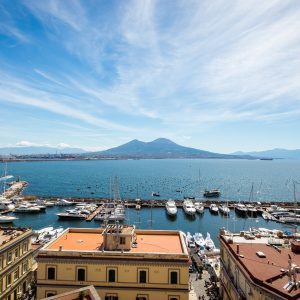
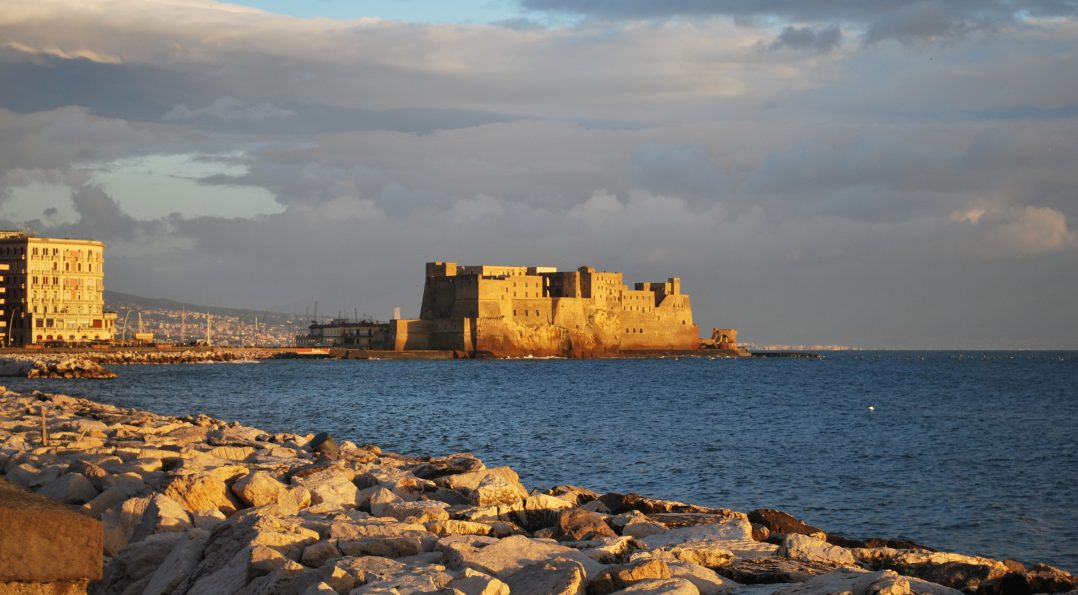
Imagine a walk along the waterfront, the sun slipping behind Vesuvius and the waves whispering against the rocks. An ancient fortress rises before you, golden-colored in the setting sun: the Castel dell'Ovo, the oldest castle in the city, overlooking the Gulf of Naples. Its silhouette dominates the small island of Megaride, a strip of rock that has witnessed the birth of legends and welcomed different peoples, from Greeks to Romans, then Normans, Swabians and Angevins.
It is here that the imagination of Neapolitans has intertwined history with a powerful image: an egg hidden in the bowels of the castle, capable - according to tradition - of guarding the balance of the city.
Parthenope and the new city
Long before the walls, there is a myth about the sea. The mermaid Parthenope, rejected by Odysseus, she let the waves rock her until she came upon Megaride. Around that legendary body arose a settlement that, in time, gave way to the Neapolis Greek, the “new city.” Naples. From Parthenope the city inherits a dual soul, seductive and melancholy, capable of enchanting those who arrive and holding those who depart with an invisible thread made of voices, smells and light.
In this same setting, centuries later, the legend of the egg that gives the castle its name will take shape. Not a simple tale, but a symbol that spans the centuries and continues to speak to us of fragility and resilience.
Virgil, the poet-magician and the egg in the dungeon
The unexpected protagonist is Virgil. He is known in school as the author of the’Aeneid, but in Naples his figure is enriched with a different aura: that of the wise man capable of protecting the city with the power of knowledge. Tradition has it that Virgil is said to have hidden in the castle dungeon a magic egg, enclosed in a cruet, suspended inside an iron cage attached to a beam in a secret room.
As long as that egg remained intact, Naples would have been safe from catastrophe and invasion. If it broke down, however, the city would know disorder and ruin. An idea so powerful that over the centuries it became a benevolent obsession: when the castle suffered damage, the authorities would rush to reassure the people by declaring that the egg was “still intact.”.
The weight of a symbol: balance, fear and hope
The strength of the legend lies not in its veracity, but in its meaning. The egg is a portrait of the city: fragile and resilient, threatened and vital. Just as living in the shadow of Vesuvius teaches one to dance on the edge, so the egg entrusts Naples with the idea of precious balance. It is a limpid metaphor: a small object can sustain a large community, as long as everyone believes in it.
And that is one of the magic things about Neapolitan culture: being able to turn a story into a social glue, a reason to protect a place, to keep it alive and untouchable. The Castel dell'Ovo has thus become not only a monument, but an emotional garrison: a sentinel of the Gulf of Naples.
Arriving at Castel dell'Ovo: a little ritual by the sea
Reaching the island of Megaride is an invitation to slowness. The isthmus that connects the castle to the mainland seems like a bridge between worlds: on one side the lights of the cafes of Via Partenope, on the other the boats of the Borgo Marinari. The salty wind, the voices of the fishermen, the smell of light frying coming from the restaurants: everything accompanies the steps as if in a natural setting.
Inside, staircases and terraces chase each other, opening glimpses of the sea and the profile of Vesuvius. Each stone tells of an era: Norman towers, Aragonese remakes, Bourbon signs. The egg, as is obvious, you will not see. But its presence hovers like a gentle echo, especially in the quieter rooms, where the shadows of ancient dungeons fire the imagination.
A story that never stops being told
The legend of the egg has never been stuck in the past. It lives on in what Neapolitans call “good talk”: the tale that passes from mouth to mouth, from tour guides to fishermen, from teachers to theater actors. It is a story that does not claim to be believed literally, but asks to be heard to better understand the spirit of Naples: the ability to hold reality and invention together, without ever really separating them.
This is why it fascinates outsiders: not because it promises a sensational secret, but because it restores a portrait of a community that recognizes itself in a shared, poetic image.
History, etymology, and a name that ignites the imagination
Scholars suggest that the name “Castel dell'Ovo” may derive from etymological reasons or the shape of the place; but the legend has prevailed in the imagination. Even skeptics, faced with the power of the tale, acknowledge that this myth helped preserve the castle and consolidate its symbolic value. A Naples It often happens like this: historical and poetic truth shake hands and walk together.
It is precisely this understanding that has turned the castle into an icon. Not just a fortress on the sea, but an ideal “guardian,” as if truly the balance of the city depended on a thin thread suspended between the stones and the water.
Experience tips for those visiting Naples
To hear the legend, it is not enough to read a panel or take a picture. Try this: approach the castle in the late afternoon, when the light fades and the breeze becomes cooler. Stop for a moment on the access bridge and look at the Gulf of Naples Open up before you. Listen to the rustling of the water, the voices of the Borgo Marinari, the distant buzz of the tables on Via Partenope. Bring with you the idea of the egg: not to believe it blindly, but to look for its shadow in the halls, in the stairways, in the overlooks of the sea.
If you can, come back even in the morning. In bright light, the castle shows another face: stark, almost geometric, as if the myth folded for a moment, leaving room for pure architecture. It is an interplay of revelations and concealments that tells well Naples: concrete and visionary, practical and dreamy.
Because this legend still speaks to everyone
The egg of Virgil continues to speak to us because it touches universal chords: the fear of chance, the need for protection, the trust in something fragile and, at the same time, most powerful. After all, every city cultivates a talisman: a place, a gesture, a story that holds it together. For Naples, that talisman is an imaginary egg, invisible but capable of redirecting gazes and reminding us that our balance is always the result of collective care.
Thus, visiting the Castel dell'Ovo, do not look for evidence. Instead, let the tale run through you. It is in the suspension between true and verisimilitude that the city shows its character: generous, ironic, sensitive to beauty and fate.
A last look from the rampart
When you go out and return to the shore, turn around once more. The castle will shine in a different light: perhaps it will not be the sun that changes it, but the gaze you have trained, now, to chase stories. And who knows, in the rustle of the wind, you may catch a good omen. It is not magic, it is Naples: a city that also knows how to protect itself with a poetic idea, light as an egg and tough as stone.